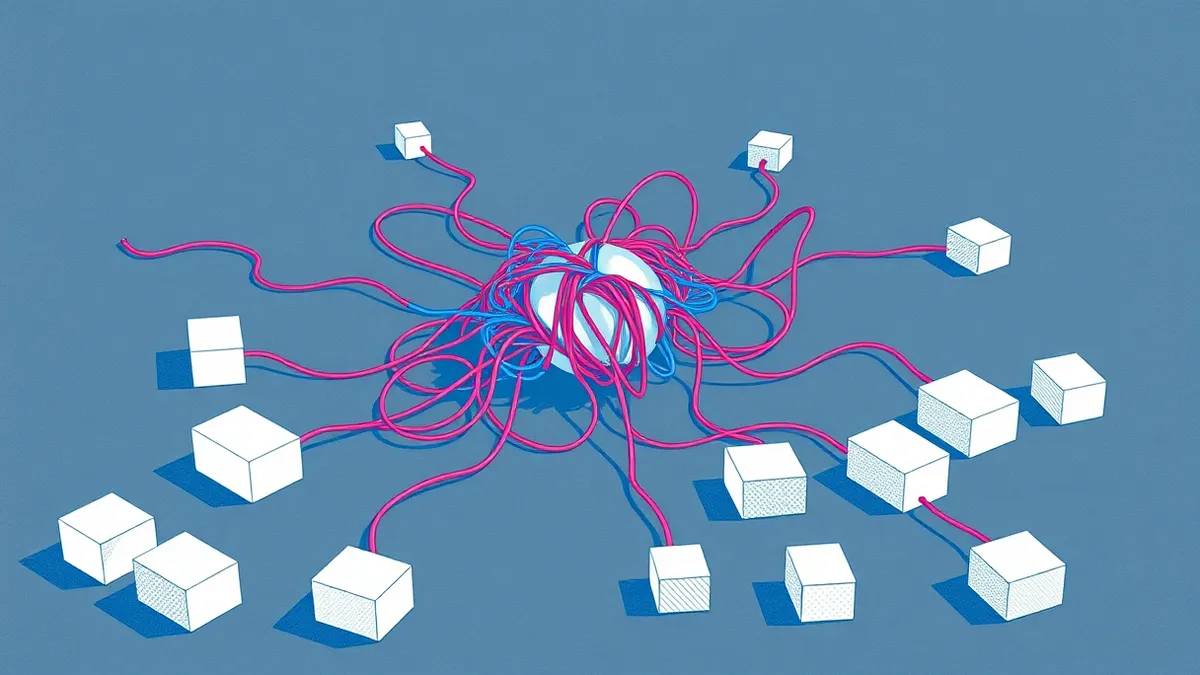
You should invest in SOAR only if your team repeats identical containment steps daily. If your incident response runbooks lack precise, conditional logic, automation will amplify errors. The tool fails without standardised processes, but it succeeds by removing human fatigue from routine data collection and initial triage decisions.
Should I invest in SOAR?
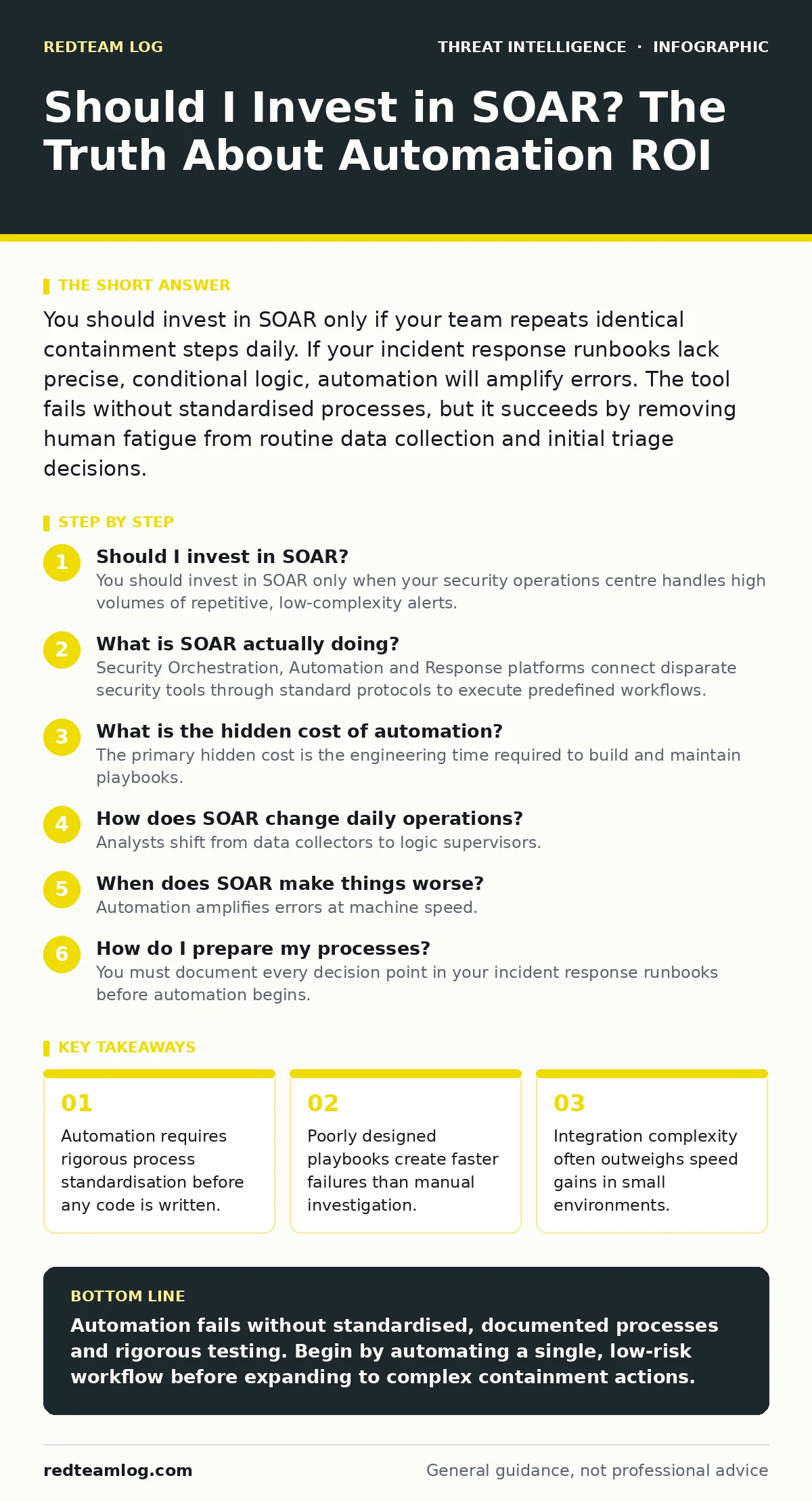
You should invest in SOAR only when your security operations centre handles high volumes of repetitive, low-complexity alerts. This decision depends entirely on process maturity, not technology desire. If your analysts spend more than 30 minutes per alert on manual data gathering, the platform pays for itself. If your alerts are rare or highly unique, the tool adds unnecessary overhead. The investment is justified by volume and repetition, not by the promise of instant security perfection.
What is SOAR actually doing?
Security Orchestration, Automation and Response platforms connect disparate security tools through standard protocols to execute predefined workflows. The orchestration layer manages the flow of data between systems, while the automation engine performs the actual tasks. Response actions involve changing system states, such as blocking an IP address or disabling a user account. This mechanism replaces manual copy-pasting between consoles with scripted execution. It reduces the time between detection and containment, provided the underlying logic remains accurate.
What is the hidden cost of automation?
The primary hidden cost is the engineering time required to build and maintain playbooks. A playbook is a visual or code-based representation of an incident response procedure. Writing these rules requires deep knowledge of both the threat and the specific API limitations of each connected tool. If a vendor updates its API, your automation breaks silently. You must allocate dedicated engineering resources to test every change. This ongoing maintenance often exceeds the initial licensing cost, turning a one-time purchase into a permanent operational expense.
How does SOAR change daily operations?
Analysts shift from data collectors to logic supervisors. Instead of manually querying logs, you review the output of automated queries. This change reduces cognitive load but increases the risk of alert fatigue if the system generates too much noise. You must tune detection use cases carefully to ensure only actionable alerts trigger automated responses. The platform handles the mundane, allowing humans to focus on complex investigations. However, this shift requires a different skill set, emphasising logic design over traditional forensic analysis.
| Task Type | Manual Effort | Automated Effort | Risk Factor |
|---|---|---|---|
| Data Enrichment | High | Low | API Rate Limits |
| Initial Triage | Medium | Low | False Positive Rate |
| Containment | Medium | High | Logic Errors |
| Forensic Analysis | Very High | None | Not Suitable |
When does SOAR make things worse?
Automation amplifies errors at machine speed. If your logic contains a flaw, the platform executes that flaw across hundreds of systems instantly. This is particularly dangerous during containment phases. Imagine a playbook that blocks all outbound traffic from a compromised host. If the logic misidentifies the host, you cripple business operations. This risk increases when integrating with complex environments like those susceptible to DCSync attacks, where misidentification can be catastrophic. You need rigorous testing environments that mirror production exactly to catch these logic failures before they cause outages.
See also: Router Firmware Vulnerabilities: Response and Recovery Steps · Emergency Patching: Correcting Five Common Operational Errors
How do I prepare my processes?
You must document every decision point in your incident response runbooks before automation begins. If a step relies on analyst intuition, it cannot be automated. Define clear thresholds for escalation. For example, specify exactly what evidence triggers a block versus an alert. This documentation reveals gaps in your current strategy. It also forces alignment between security, IT and legal teams. Without this clarity, the platform becomes a repository of inconsistent, ad-hoc scripts that fail under pressure.
What integrations are actually necessary?
Start with core identity and network controls. Integrate your directory service to manage user access and your firewall to control traffic. These systems offer the highest return on investment for containment. Avoid integrating niche tools that rarely trigger alerts. Each integration adds complexity to your maintenance burden. Focus on the MITRE ATT&CK framework tactics that cause the most damage in your environment, such as initial access or lateral movement. Prioritise connections that allow you to stop remote desktop abuse quickly, as this remains a primary attack vector for many organisations.
How do I measure success?
Measure the reduction in mean time to respond, not just the number of alerts processed. Monitor the false positive rate of automated actions. If analysts frequently reverse automated decisions, your logic is flawed. Review the cost of engineering hours spent on maintenance versus the hours saved by analysts. Success looks like stable, predictable operations, not just faster processing. You should see a decrease in burnout among your team members as routine tasks disappear.
What is the first step to take?
Start by mapping your most frequent, lowest-risk incident type. Choose a scenario where a mistake is easily reversible, such as isolating a test endpoint. Build a single, simple playbook for this scenario. Test it extensively in a isolated environment. Involve the analysts who would use it daily in the design process. Their feedback is vital for creating usable logic. Expand only after this single workflow operates flawlessly for several weeks. This incremental approach prevents overwhelming your team and infrastructure.
Key takeaways
- Automation requires rigorous process standardisation before any code is written.
- Poorly designed playbooks create faster failures than manual investigation.
- Integration complexity often outweighs speed gains in small environments.
Automation fails without standardised, documented processes and rigorous testing. Begin by automating a single, low-risk workflow before expanding to complex containment actions.
Frequently asked questions
Can SOAR replace security analysts?
No, it replaces repetitive tasks, allowing analysts to focus on complex investigations and strategy.
Is cloud-based SOAR better than on-premise?
Cloud solutions offer easier updates and scalability, while on-premise options provide greater control over sensitive data.
How long does implementation take?
Simple playbooks can be built in days, but full platform integration often takes months of tuning and testing.
Does SOAR work with open-source tools?
Yes, most platforms support standard APIs, allowing integration with open-source security tools and frameworks.
How this guide was produced: written by the RedTeam Log editorial team with AI assistance, checked against the public references listed below, and reviewed when the facts change. See our editorial policy or report an error.