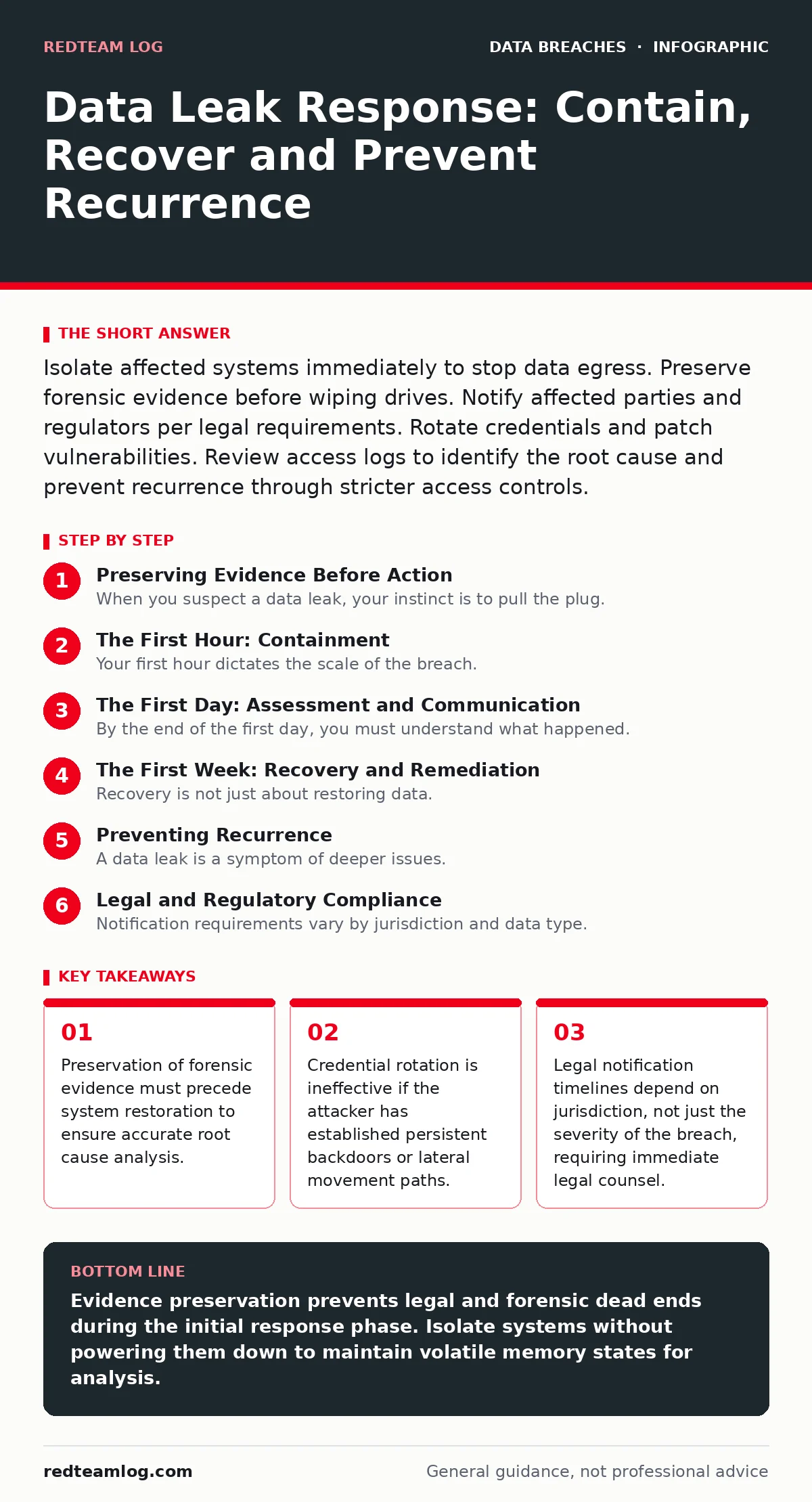
Isolate affected systems immediately to stop data egress. Preserve forensic evidence before wiping drives. Notify affected parties and regulators per legal requirements. Rotate credentials and patch vulnerabilities. Review access logs to identify the root cause and prevent recurrence through stricter access controls.
Preserving Evidence Before Action
When you suspect a data leak, your instinct is to pull the plug. This instinct is dangerous. Disconnecting a system powers down volatile memory, destroying evidence of active processes, network connections and encryption keys. You lose the ability to determine how the attacker entered and what they exfiltrated.
Imagine a scenario where an attacker uses a memory-resident malware strain. If you reboot the server to stop the leak, the malware vanishes from RAM. You can no longer prove the compromise occurred or identify the specific strain. This lack of evidence complicates insurance claims and legal defences.
Instead, isolate the system from the network while keeping it powered on. This stops further data exfiltration without losing the current state of the machine. If you must power it down due to immediate physical threat, document the exact state and reason. This documentation protects your legal position and aids future investigations.
The First Hour: Containment
Your first hour dictates the scale of the breach. Speed is critical, but precision prevents escalation. You need to contain the spread without alerting the attacker to your awareness, which might cause them to destroy evidence or accelerate their exfiltration.
- Identify the scope of affected systems and data.
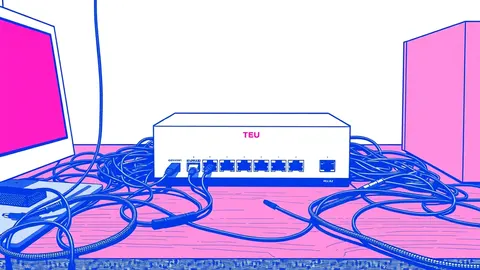
- Isolate compromised endpoints from the network via switch port disabling.
- Disable compromised user accounts and service credentials.
- Preserve logs from firewalls, endpoints and identity providers.
- Engage legal counsel to determine notification obligations.
Disabling accounts is more effective than changing passwords in the initial phase. Password changes can trigger session tokens to remain valid, allowing the attacker to maintain access. Account disablement immediately terminates active sessions and prevents new authentications.
Consider the impact of shared service accounts. If an attacker compromises a service account used by multiple applications, disabling it causes widespread service outages. You must balance containment with business continuity. Have a plan to rotate credentials for these accounts in a controlled manner.
The First Day: Assessment and Communication
By the end of the first day, you must understand what happened. This requires analysing the preserved logs and memory dumps. You need to determine the entry point, the duration of access and the data involved. This assessment informs your communication strategy and recovery plan.
Communication is not just about external notifications. Internal teams need clear, accurate information to avoid panic and misinformation. You must align your messaging with legal advice to avoid admitting liability prematurely. Vague statements can erode trust more than the breach itself.
Refer to your incident communication plans to ensure consistent messaging across all channels. This includes customers, employees, regulators and the media. Delaying communication can worsen reputational damage and lead to regulatory penalties.
The First Week: Recovery and Remediation
Recovery is not just about restoring data. It is about ensuring the attacker cannot return. You must rebuild affected systems from known-good images, not just clean the existing ones. Malware often hides in file system metadata, boot sectors or firmware, making standard cleaning insufficient.
Credential rotation is a critical step. You must change passwords for all compromised accounts and any accounts that shared privileges. However, rotation alone is insufficient if the attacker has established persistent backdoors. You must scan for unauthorized changes to system configurations and user rights.
Review your access controls during this phase. Many breaches occur because users have excessive privileges. Implement the principle of least privilege to limit what each user and service account can do. This reduces the impact of future compromises by limiting the attacker’s ability to move laterally.
Check for unauthorized access points in your network architecture. Attackers often create hidden accounts or modify firewall rules to maintain access. You must verify the integrity of your entire infrastructure, not just the compromised systems.
Preventing Recurrence
A data leak is a symptom of deeper issues. To prevent recurrence, you must address the root cause. This often involves technical and procedural changes. Technical fixes include patching vulnerabilities, updating configurations and enhancing monitoring. Procedural changes involve training employees and refining security policies.
Employee data breaches often stem from social engineering or phishing. Regular training helps, but it is not enough. You must implement technical controls like email filtering and sandboxing to block malicious content before it reaches users.
Monitor for credential exposure in public databases. Attackers often steal credentials from other breaches and reuse them. You must check for exposed credentials and force resets for any matches. This proactive approach reduces the risk of account takeover.
See also: Should I Invest in SOAR? The Truth About Automation ROI · Emergency Patching: Correcting Five Common Operational Errors
Legal and Regulatory Compliance
Notification requirements vary by jurisdiction and data type. You must identify which laws apply to your organisation and the data involved. This includes GDPR, CCPA and other regional regulations. Failure to notify within mandated timeframes can result in significant fines.
Work closely with legal counsel to draft notifications. These must be clear, accurate and timely. They should explain what happened, what data was involved and what steps you are taking. Avoid technical jargon that confuses readers. Focus on the impact and remediation.
Consider the implications for data subject rights. Individuals have the right to know about breaches that affect them. They may also request deletion of their data or access to records. You must have processes in place to handle these requests efficiently.
Long-Term Resilience
Building resilience requires a shift in mindset. Security is not a project; it is a continuous process. You must regularly test your incident response plans, update your security architecture and train your staff.
Adopt frameworks like SOC 2 to benchmark your security practices. These frameworks provide a structured approach to managing security risks. They help you identify gaps and prioritize improvements.
Continuous monitoring is essential. You need to detect anomalies in real-time. This includes monitoring for unusual login patterns, data access and network traffic. Early detection reduces the impact of breaches and improves your response capabilities.
Regularly review your security posture. Threats evolve, and so must your defences. Engage in red teaming exercises to test your controls. This helps you identify weaknesses before attackers do.
Key takeaways
- Preservation of forensic evidence must precede system restoration to ensure accurate root cause analysis.
- Credential rotation is ineffective if the attacker has established persistent backdoors or lateral movement paths.
- Legal notification timelines depend on jurisdiction, not just the severity of the breach, requiring immediate legal counsel.
Evidence preservation prevents legal and forensic dead ends during the initial response phase. Isolate systems without powering them down to maintain volatile memory states for analysis.
Frequently asked questions
How do I know if my data has been leaked?
Monitor for unusual outbound traffic, unauthorized access attempts and alerts from threat intelligence feeds indicating your credentials are exposed.
Should I notify customers immediately?
Notify customers as soon as you have determined the scope and impact, following legal requirements and your incident communication plans.
What is the difference between a breach and a leak?
A breach is unauthorized access to data, while a leak is the unauthorized disclosure of that data. A breach may not result in a leak if contained early.
How long should I keep forensic evidence?
Keep evidence for the duration of legal proceedings and regulatory investigations, which can extend for years. Consult legal counsel for specific retention policies.
How this guide was produced: written by the RedTeam Log editorial team with AI assistance, checked against the public references listed below, and reviewed when the facts change. See our editorial policy or report an error.