
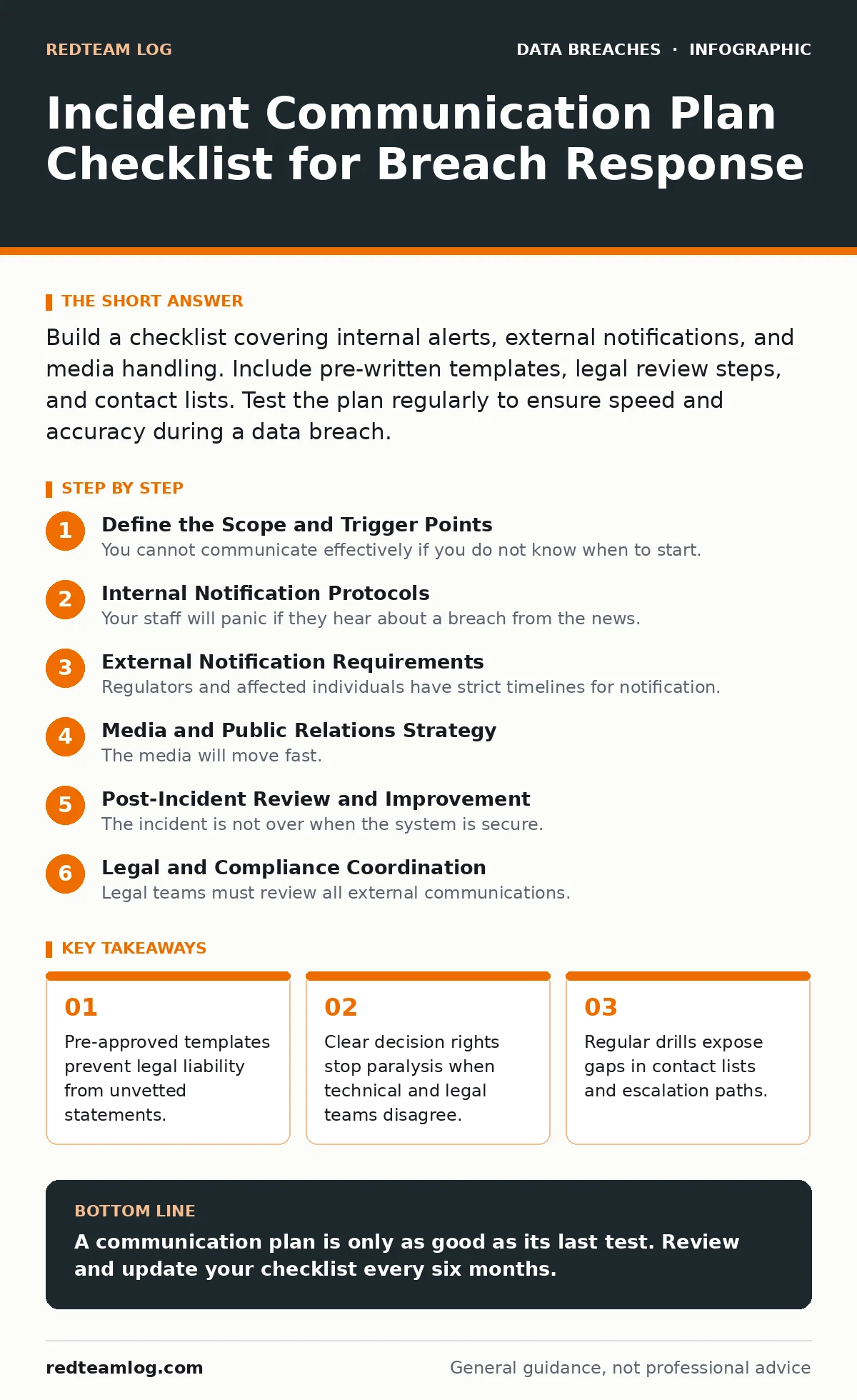
Build a checklist covering internal alerts, external notifications, and media handling. Include pre-written templates, legal review steps, and contact lists. Test the plan regularly to ensure speed and accuracy during a data breach.
Define the Scope and Trigger Points
You cannot communicate effectively if you do not know when to start. Define the specific events that trigger your incident communication plan. This prevents hesitation during the first minutes of a crisis.
- Define trigger events: Clear criteria prevent delay in starting the response process.
- Classify incident severity levels: Different severities require different communication speeds and audiences.
- Identify initial assessment team: A small group must verify the breach before wider notification.
Suppose a server goes offline. Is it a power cut or a ransomware attack? Your plan must distinguish between operational issues and security incidents. This distinction dictates whether you wake the legal team or just the IT support staff.
Internal Notification Protocols
Your staff will panic if they hear about a breach from the news. You must control the internal narrative immediately. Silence creates rumours that are harder to correct than facts.
- Draft internal alert templates: Pre-written messages ensure consistent and calm internal communication.
- List internal stakeholder contacts: Know exactly who needs to know before public disclosure.
- Set communication frequency: Regular updates prevent speculation and maintain operational focus.
Staff do not need to know every technical detail of the exploit. They need to know if they should stop working, change their passwords, or ignore suspicious emails. Clarity reduces the chance of accidental data leaks during the chaos. See our guide on employee data breaches for more on human factors.
External Notification Requirements
Regulators and affected individuals have strict timelines for notification. Missing these deadlines can result in significant legal penalties. Your plan must map out who needs to be told and when.
- Identify regulatory bodies: Know which authorities require notification for your industry.
- Draft customer notification templates: Clear, empathetic messages help maintain trust and compliance.
- Define notification timelines: Strict deadlines ensure legal compliance and reduce liability.
You must decide whether the breach affects personally identifiable information. If it does, the clock starts ticking immediately. The content of your message must be accurate but not overly technical. It should explain what happened, what data was involved, and what steps you are taking.
Media and Public Relations Strategy
The media will move fast. If you do not have a spokesperson and key messages ready, they will fill the silence with speculation. A coordinated public response limits reputational damage.
- Designate a single spokesperson: One voice prevents conflicting messages and confusion.
- Prepare key talking points: Consistent messages ensure accuracy across all channels.
- Monitor social media channels: Early detection of public concern allows for timely response.
Imagine a customer posts about their compromised account on social media. Your plan must include a process for monitoring and responding to these posts. Ignoring public concern can escalate a minor issue into a major crisis. Ensure your data encryption practices are clearly explained if relevant to the breach.
Post-Incident Review and Improvement
The incident is not over when the system is secure. You must review how you communicated to improve future responses. This step is often skipped but is vital for long-term resilience.
- Conduct a communication audit: Review what worked and what failed during the incident.
- Update templates and contacts: Keep your plan current with new staff and regulations.
- Schedule regular drills: Practice ensures your team can execute the plan under pressure.
Reviewing your communication helps you identify gaps in your principle of least privilege policies. If too many people knew too much, your plan needs adjustment. Regular drills also help you test your SOC 2 compliance procedures.
See also: Should I Invest in SOAR? The Truth About Automation ROI · Emergency Patching: Correcting Five Common Operational Errors
Legal and Compliance Coordination
Legal teams must review all external communications. A well-intentioned statement can admit liability or violate regulations. Coordination between technical and legal teams is essential.
- Define legal review process: Ensure all external messages are vetted for liability.
- Document all communications: Keep a record of what was said and when for legal defence.
- Coordinate with insurance providers: Notify insurers early to ensure coverage for response costs.
Do not let technical teams speak to the press without legal approval. Technical accuracy does not equal legal safety. A statement that is factually correct may still admit negligence. See our guide on data subject rights to understand the legal implications of data exposure.
Testing and Maintenance
A plan on paper is useless if it has never been tested. You must validate your communication plan through regular exercises. This reveals hidden dependencies and outdated information.
- Schedule tabletop exercises: Simulate breaches to test communication workflows.
- Verify contact lists quarterly: Ensure all phone numbers and emails are current.
- Review regulatory changes: Update your plan to reflect new legal requirements.
Suppose your primary spokesperson is unavailable. Does your plan have a backup? Testing reveals these single points of failure. It also helps you refine your password rotation policies if credential theft was involved.
Key takeaways
- Pre-approved templates prevent legal liability from unvetted statements.
- Clear decision rights stop paralysis when technical and legal teams disagree.
- Regular drills expose gaps in contact lists and escalation paths.
A communication plan is only as good as its last test. Review and update your checklist every six months.
Frequently asked questions
How often should I test my incident communication plan?
Test at least twice a year with tabletop exercises. More frequent tests are better for high-risk environments.
Who should be included in the initial notification list?
Include legal, PR, IT security, and senior management. Tailor the list to your organisation’s size and structure.
What if I am unsure if a breach has occurred?
Treat it as a breach until proven otherwise. Early internal notification allows for better investigation and containment.
How do I handle conflicting advice from technical and legal teams?
Pre-define decision rights in your plan. Legal usually has the final say on external communications to mitigate liability.
How this guide was produced: written by the RedTeam Log editorial team with AI assistance, checked against the public references listed below, and reviewed when the facts change. See our editorial policy or report an error.