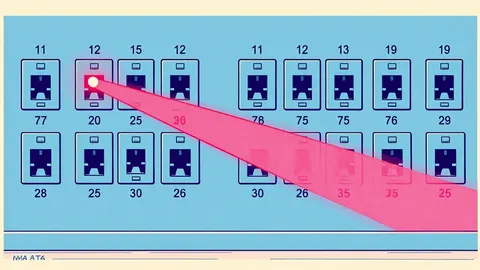
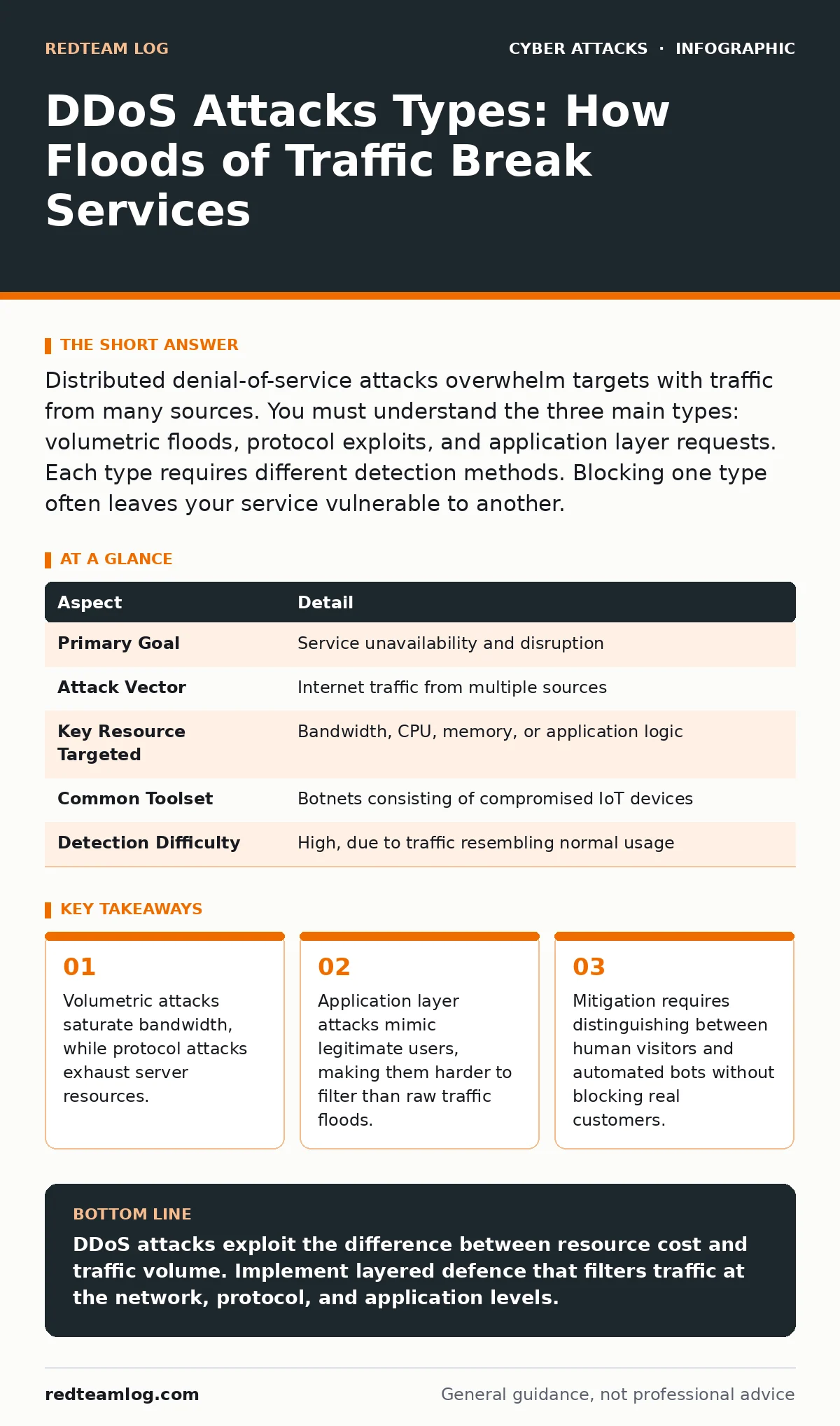
Distributed denial-of-service attacks overwhelm targets with traffic from many sources. You must understand the three main types: volumetric floods, protocol exploits, and application layer requests. Each type requires different detection methods. Blocking one type often leaves your service vulnerable to another.
Understanding the Core Mechanism
A distributed denial-of-service (DDoS) attack overwhelms a target system with excessive traffic from multiple compromised devices. This flood of requests consumes available resources, causing the service to slow down or crash entirely. The attacker does not need to breach your firewall or steal data. They simply make your system too busy to respond to legitimate users. The "distributed" part means the traffic comes from thousands of locations, making it difficult to block by simply cutting off one IP address.
Imagine a small shop with one door. If 100 people line up orderly, the shop serves them quickly. Now imagine 10,000 people rush the door at once. No one can enter or leave. The shop is open, but it cannot function. This is the basic logic of a DDoS attack. The goal is disruption, not theft. The attacker wants to cause financial loss, reputational damage, or distract security teams while they perform another action elsewhere.
| Aspect | Detail |
|---|---|
| Primary Goal | Service unavailability and disruption |
| Attack Vector | Internet traffic from multiple sources |
| Key Resource Targeted | Bandwidth, CPU, memory, or application logic |
| Common Toolset | Botnets consisting of compromised IoT devices |
| Detection Difficulty | High, due to traffic resembling normal usage |
DDoS Attacks Types: Volumetric Floods
Volumetric attacks aim to clog the pipeline between the attacker and the target. These DDoS attacks types generate massive amounts of data, measured in bits per second. The attacker sends simple packets that require minimal effort to create but consume significant bandwidth to process. Common methods include UDP floods, where random data is sent to random ports, and DNS amplification, where small queries trigger large responses from third-party servers.
The danger here is sheer volume. If your internet connection is 1 gigabit per second, an attack of 10 gigabits will saturate your link. Legitimate traffic cannot get through. Defending against this requires moving your service behind a scrubbing centre that absorbs the excess traffic. You cannot stop this with a standard firewall. You need upstream filtering that sits between the public internet and your infrastructure.
Protocol Layer Exhaustion
Protocol attacks target the specific rules that govern how computers talk to each other. These DDoS attacks types exploit weaknesses in the TCP/IP stack. A classic example is the SYN flood. A computer starts a connection by sending a SYN packet. The server replies with SYN-ACK and waits for a final ACK. The attacker sends many SYN packets but never finishes the handshake. The server keeps half-open connections in memory, waiting for the final step that never comes.
This consumes the server's memory and connection table. When the table is full, the server cannot accept new connections, even from legitimate users. This type of attack is more efficient than volumetric floods. It uses less bandwidth but achieves the same result. You mitigate this by tuning your server to timeout half-open connections faster or by using TCP proxy services that complete the handshake on behalf of your server.
Application Layer Deception
Application layer attacks are the most difficult to detect because they look like normal user behaviour. These DDoS attacks types target specific functions of your website or application. The attacker sends HTTP GET requests to heavy pages, such as search results or shopping cart checkouts. Each request is small, but the processing cost is high. The server must query the database, render the page, and send it back.
A single human user might click 10 times a minute. A bot can click 1,000 times a minute. The server runs out of CPU cycles or database connections. Standard firewalls allow this traffic because it uses standard ports and valid protocols. You need application-aware filtering that understands your site's logic. Rate limiting specific URLs or requiring JavaScript challenges can stop simple bots. However, sophisticated attacks use real browser instances, making them nearly indistinguishable from humans.
Who Suffers the Consequences
Any public-facing service can become a target. Small businesses are often hit because they lack the resources for advanced mitigation. Large corporations are targeted for reputational damage or as a distraction for other crimes. Critical infrastructure, such as power grids or healthcare systems, faces risks to public safety. The impact is not just technical. Downtime leads to lost revenue, customer churn, and legal liability.
Managed service providers face a unique challenge. They must protect multiple clients with varying levels of exposure. A single attack on one client can consume resources needed for others. You must have clear isolation strategies. If one tenant is under attack, the noise should not bleed into other tenants' networks. Regular drills with your incident response plans ensure you can react quickly without panic.
See also: Beaconing Detected: Step-by-Step Response and Recovery Plan · Stop Remote Desktop Abuse: Priority Defences and Hidden Risks
Common Misconceptions About Defence
Many organisations believe a firewall stops DDoS attacks. This is incorrect. Firewalls filter based on IP addresses and ports. DDoS traffic comes from thousands of legitimate IPs. Blocking them blocks legitimate users too. Another mistake is assuming that buying more bandwidth solves the problem. Attackers can always generate more traffic than you can afford to buy.
You also cannot rely solely on your hosting provider. While they offer basic protection, sophisticated attacks require specialised mitigation. You need a layered approach. Start with network design that limits exposure. Use cloud-based protection for volumetric attacks. Implement application-level controls for layer 7 attacks. Integrate these tools with your security operations centers for continuous monitoring.
Building a Resilient Architecture
Resilience means designing your system to survive partial failure. Use load balancers to distribute traffic across multiple servers. If one server fails, others take over. Use content delivery networks to cache static content. This reduces the load on your origin servers. Implement geo-blocking if your service is only needed in specific regions. This cuts down on noise from unwanted locations.
Regular testing is vital. Simulate attacks to see where your bottlenecks are. Update your configurations based on what you learn. Stay informed about new attack vectors. The tactics evolve, so your defence must evolve too. Do not wait for an attack to test your limits. Proactive preparation reduces downtime and stress.
Key takeaways
- Volumetric attacks saturate bandwidth, while protocol attacks exhaust server resources.
- Application layer attacks mimic legitimate users, making them harder to filter than raw traffic floods.
- Mitigation requires distinguishing between human visitors and automated bots without blocking real customers.
DDoS attacks exploit the difference between resource cost and traffic volume. Implement layered defence that filters traffic at the network, protocol, and application levels.
Frequently asked questions
How do I know if I am under a DDoS attack?
Look for sudden spikes in traffic, increased response times, or inability to access your site from certain locations. Check your server logs for unusual patterns.
Can a VPN stop a DDoS attack?
No, a VPN encrypts traffic but does not filter volume. It may even hide the attack from your view until the server crashes.
Should I block all international traffic?
Only if your service is domestic. Blocking international traffic can protect against foreign botnets but excludes legitimate global users.
How does SPF relate to DDoS?
SPF prevents email spoofing, not DDoS. However, reducing spoofed traffic can lower noise in your logs, making real attacks easier to spot.
How this guide was produced: written by the RedTeam Log editorial team with AI assistance, checked against the public references listed below, and reviewed when the facts change. See our editorial policy or report an error.